Homologous vs Analogous
-----
1. Homologous
Two animals that share a homologous trait are: Dolphins and Whales!
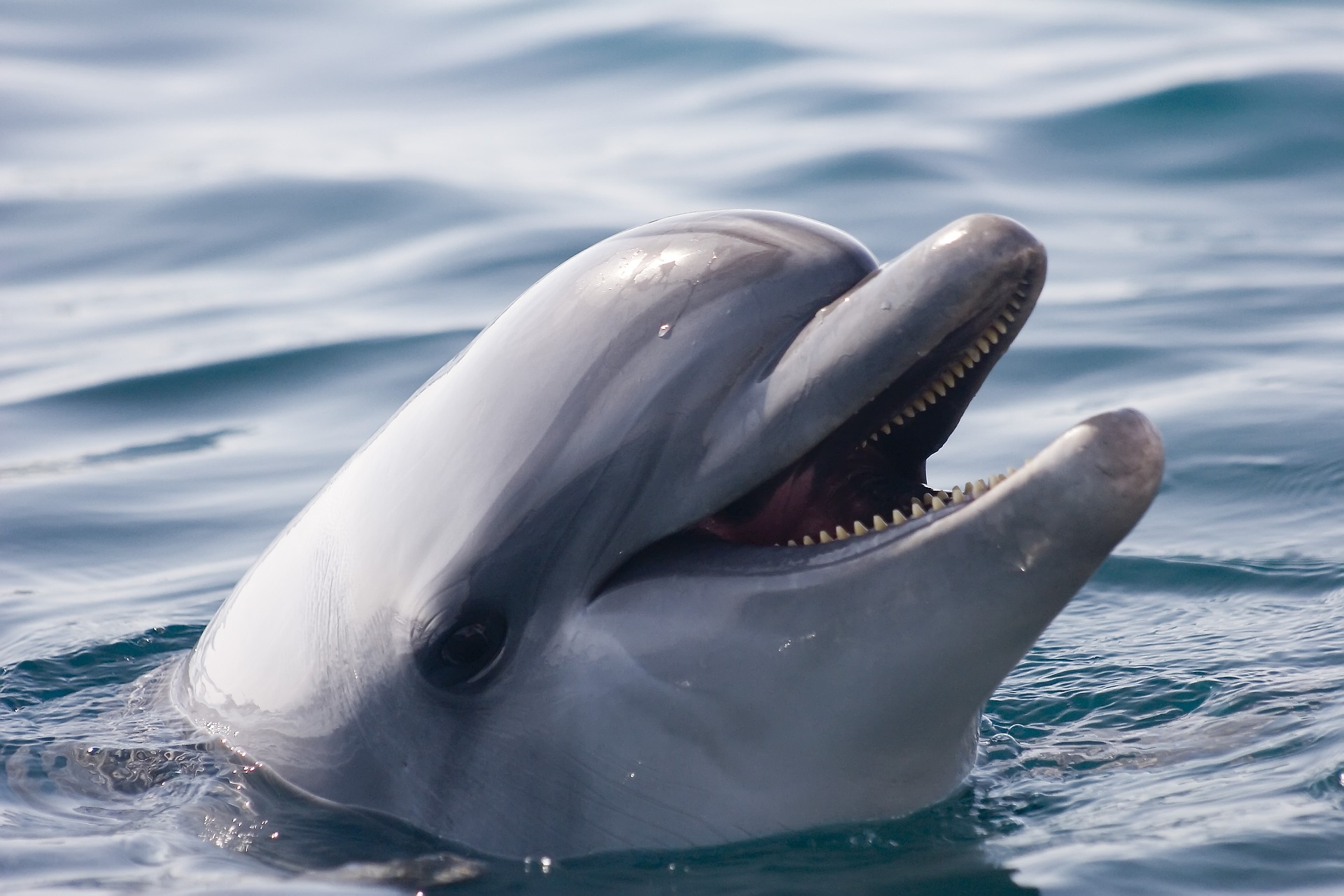 These two share a common ancestor!
The scientific name for the whale species as a whole is Mysticetes. They feed on krill with their filtered "teeth". They have no hind legs and possess a blowhole, as they are mammals and require air to breathe. The scientific name for dolphins is Odontocetes. Like whales, they need air to breathe, so they too possess blowholes and have no hind legs. But instead of filtering for their food, they have sharp teeth and hunt for their prey with echolocation. They are generally faster swimmers than (most) whales because of this. Dolphins and whales are both primarily aquatic mammals that evolved from a small, deer-like land creature called Indohyus (or at least its scientific name).


The homologous trait that these two modern-day creatures share is a genetic trait of living underwater despite being mammals that was adopted by their common ancestor Indohyus in order to roam and search for prey in the plentiful rivers and lakes. Sometime about fifty million years ago there might have been a cause to seek the water habitat due to the limited availability in food on land for the Indohyus and Pakicetus which eventually lead to hunting in salt waters for food once they adapted well into swimming.
The real difference between dolphins and whales though is their speed. No, really! The truest of differences lies in what they eat, and their size. Whales are huge! And the prey they eat is so small! They have no real natural predators unless they're really old and sick and can be picked off. Therefore their speed in traversing the oceans is rather slow compared to dolphins. Dolphins have actual teeth, so it's quite clear that they should be fast swimmers in order to chase down their prey. Fun fact if you didn't know it already: Killer Whales, also known as Orca, are not whales. They are, in fact, dolphins! You should be able to tell from their fast speeds, hunting technique, and their very sharp teeth.
-----
2. Analogous
Two very specific animals that have an analogous trait are: the Boomslang (Dispholidus typus) and the Cone Snail (Conidae). I personally could not find a common ancestor between snakes and snails, but they both seem to (generally) seek out cool, damp habitats.
 They share one specific trait though.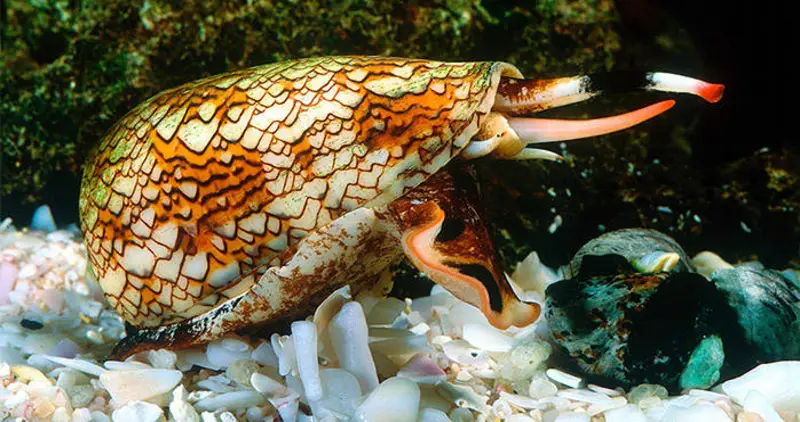
Both Cone Snails and Boomslangs are venomous. They use their poison to kill and consume their prey. Unluckily for us, they are not like some other venomous creatures, whose bites and stings only minimally harm humans. Instead, Boomslang venom attacks the bloodstream and will make you bleed out of every opening in your body. Boomslangs live in Sub-Saharan Africa. Not many have died from Boomslangs, as their fangs are placed strangely in their heads so you'd need to be very unlucky to be bitten by one. Despite this, you will die if you are bitten.
There are over 800 species of Cone Snails, and they live variously throughout the Western-Indo Pacific Ocean, including lower Southern California, so be wary of picking up cone shells on the beach. They have a deadly harpoon that can even penetrate wetsuits. Severe cases may include paralysis, respiratory failure, and death.
Now, these creatures have no obvious common ancestor, as far as I know, yet they both produce a very deadly venom. There is a separate evolution for the venom that is very interesting. There may be an original gene that is the cause of venom. In any case, don't go near brightly colored animals. They may be faking venom to ward of predators, or they may be the predator themselves.
-----
1. Homologous
Two animals that share a homologous trait are: Dolphins and Whales!
These two share a common ancestor! The scientific name for the whale species as a whole is Mysticetes. They feed on krill with their filtered "teeth". They have no hind legs and possess a blowhole, as they are mammals and require air to breathe. The scientific name for dolphins is Odontocetes. Like whales, they need air to breathe, so they too possess blowholes and have no hind legs. But instead of filtering for their food, they have sharp teeth and hunt for their prey with echolocation. They are generally faster swimmers than (most) whales because of this. Dolphins and whales are both primarily aquatic mammals that evolved from a small, deer-like land creature called Indohyus (or at least its scientific name).
The homologous trait that these two modern-day creatures share is a genetic trait of living underwater despite being mammals that was adopted by their common ancestor Indohyus in order to roam and search for prey in the plentiful rivers and lakes. Sometime about fifty million years ago there might have been a cause to seek the water habitat due to the limited availability in food on land for the Indohyus and Pakicetus which eventually lead to hunting in salt waters for food once they adapted well into swimming.
The real difference between dolphins and whales though is their speed. No, really! The truest of differences lies in what they eat, and their size. Whales are huge! And the prey they eat is so small! They have no real natural predators unless they're really old and sick and can be picked off. Therefore their speed in traversing the oceans is rather slow compared to dolphins. Dolphins have actual teeth, so it's quite clear that they should be fast swimmers in order to chase down their prey. Fun fact if you didn't know it already: Killer Whales, also known as Orca, are not whales. They are, in fact, dolphins! You should be able to tell from their fast speeds, hunting technique, and their very sharp teeth.
-----
2. Analogous
Two very specific animals that have an analogous trait are: the Boomslang (Dispholidus typus) and the Cone Snail (Conidae). I personally could not find a common ancestor between snakes and snails, but they both seem to (generally) seek out cool, damp habitats.
They share one specific trait though. Both Cone Snails and Boomslangs are venomous. They use their poison to kill and consume their prey. Unluckily for us, they are not like some other venomous creatures, whose bites and stings only minimally harm humans. Instead, Boomslang venom attacks the bloodstream and will make you bleed out of every opening in your body. Boomslangs live in Sub-Saharan Africa. Not many have died from Boomslangs, as their fangs are placed strangely in their heads so you'd need to be very unlucky to be bitten by one. Despite this, you will die if you are bitten.
There are over 800 species of Cone Snails, and they live variously throughout the Western-Indo Pacific Ocean, including lower Southern California, so be wary of picking up cone shells on the beach. They have a deadly harpoon that can even penetrate wetsuits. Severe cases may include paralysis, respiratory failure, and death.
Now, these creatures have no obvious common ancestor, as far as I know, yet they both produce a very deadly venom. There is a separate evolution for the venom that is very interesting. There may be an original gene that is the cause of venom. In any case, don't go near brightly colored animals. They may be faking venom to ward of predators, or they may be the predator themselves.
-----
You offer a lot of great detail in your homologous section. Very informative.
ReplyDeleteA couple of clarifications:
I recognize that these two species share a *behavior* of living in an aquatic environment, but we usually speak of "traits" as physical (ideally, skeletal) structures that can be found in the fossil record. This allows us to trace them through the fossil record to confirm genetic relationships. So if living in an aquatic environment is a behavior shared in these two species, how is that reflected in their body structure. The idea here was to explain the differences in structure based upon differences in function. You have the function. Just identify the structure.
For example, in your very good image, it talks about the position of the blowhole, with the hole in the dolphin being positions further back. This is at least partially due to how they move through the water, with the dolphin's back being arched more than the whales. This requires the blowhole to be seated farther back to more efficiently access the air when it surfaces. Whales are flatter, but also access the surface by thrusting the "nose"above the water, clearing their lungs and refilling them, before diving back down.
You do discuss ancestry but not in terms of a homologous trait. Yes, the behavior of living in an aquatic environment is a behavior inherited from a common aquatic ancestor. But how do we see that in the fossil record? Do we see the pattern of a blowhole in the fossil record?
Analogy:
Interesting comparison. I was unaware of this while traveling in the Philippines. I came home with a massive cone shell I picked up while snorkeling. Fortunately, it was unoccupied, or I wouldn't be here to teach this class. :-)
Good species description and good discussion on the similarities in function. I don't see the similarity in structure, however, and again, that is the focus here... similarities in structure explained via similarities in function. Do you see a similarity in the fangs of the snake and the "harpoon" structure in the cone snail?
As explained in the guidelines, all organisms share a common ancestor if you go back far enough. But the question is, did these two organisms inherit this trait from that common ancestor. Because of the differences in the delivery system (i.e., the "structure"), it is easier to confirm that these traits are not genetically related. They show now evidence of common descent. But I'm still in question as to whether they are similar enough in structure to be analogous. I'm willing to consider it, but need more information.
Good images.
I really enjoyed the pictures you included in your post, especially in the homologous section that showed the ancestors of the whale and dolphin.
ReplyDeleteYou chose interesting animals for your analogues traits, but I am kind of confused by which trait you are comparing. Do cone snails have fangs that produce venom or what part of their structure do they produce their venom. Other than that I enjoyed your post!
Hello,
ReplyDeleteYou had a very informative post! I always knew that cone snails were poisonous but I didn't know why or to what degree. I like that you compared whales and dolphins as well. They are increebily similiar, but they do have very big differences.