Human Variation and Race: Cold Adaption

Humans are amazingly adaptable. One environmental stress that some human cultures have generationally and therefore genetically adapted to is the cold. Cultures such as the Inuit of western Alaska and northern Canada areas survive in extreme colds that most Americans would not be able to endure for long without drastic cultural adaptions.
The normal body core temperature of the average person is 98.6 F. If you go any lower, you may start to notice your body react in order to protect your core temperature which keeps your internal bodily conditions intact and safe.
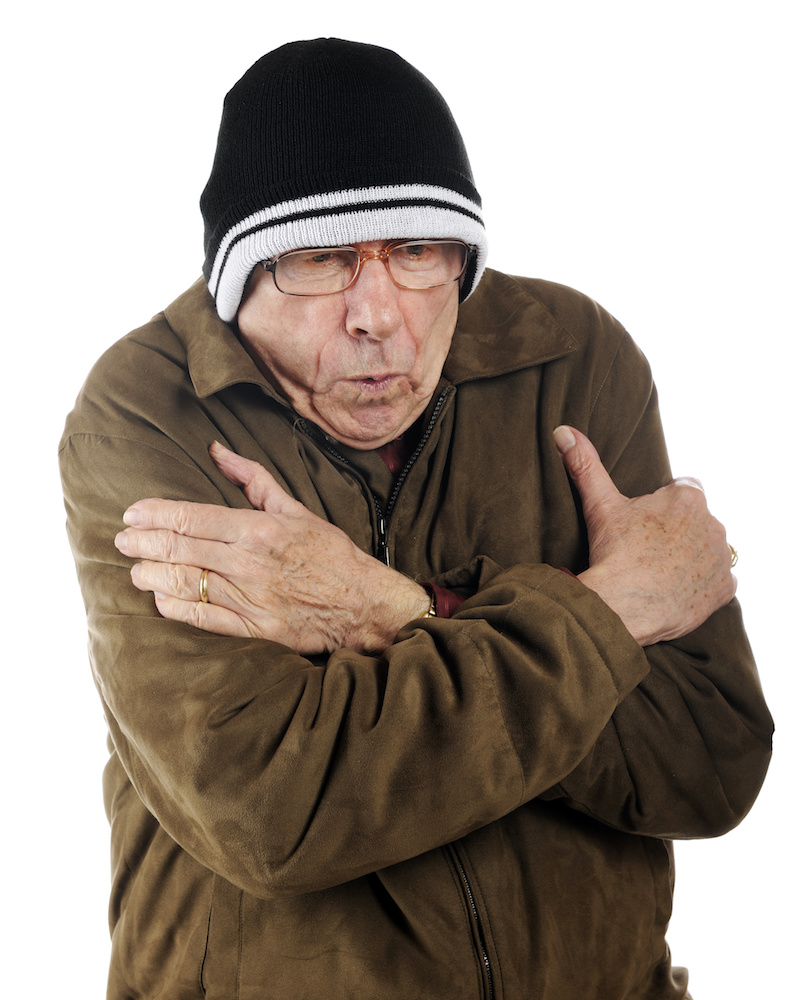
For example, your body may shiver (a short-term adaptation) in an effort to warm up and create your own heat, or the blood vessels in your skin will constrict in order to lose less heat. These reactions are the disturbance of homeostasis in order to combat environmental stress.

A facultative adaptation to the cold would be gaining weight in order to gain a better barrier against the weather while also retaining body heat, and keeping a stable core temperature. Inuit consume fatty foods that are the most effective in gaining weight.
A cultural adaptation is

for warmth, such as insulated clothing.
Lastly, in terms of adaption, a developmental trait would be the roundness and squat, shorter nature of those more acclimated to the cold genetically, like the Inuit.

A likely benefit of studying this reaction to the cold for anyone of any environmental cline is to mimic it as best as possible through cultural adaptions, such as warm layers of insulated clothes, changing your diet to eat more fatty foods, pull towards yourself when sitting or sleeping in order to keep the body heat circulating, and shivering (though it is largely an involuntary response).
It could also help for any body size seeking to either slim down or buff up by adding or subtracting fatty foods from your diet.
In terms of race, cold adaptation can certainly alter outward phenotypes that would ultimately lead to being able to visually see who is more acclimatable to the cold because of their generational cultures or lifestyles. By the roundness, possible redness (because of blood vessels in the face for warmth) in the face, shortness, and layers of insulated clothing may lead one to assume that person is from a culture such as the Inuit, Yupik, or Aleuts. But the color of their skin is less differential from them and you than the location they live in that has influenced their culture and diet and adaptations to their environment.

The biological study of the environmental influences that make them who they are can help understand human variation better than race, which is an empty social construction. The color of skin is just melanin, which is just another factor of environmental adaptation.

Your opening paragraph doesn't explain the negative impact cold stress has on the human body. You kind of jump right into a discussion of adaptations to this cold stress. So what happens to the body when the core body temperature drops below the optimum temperature of 98.6 degrees? What, specifically, happens to the internal organs, particularly the brain, and the circulatory system? Why can't it function well below this temperature? What medical disorders arise from this drop in body temperature?
ReplyDeleteOkay on the shivering. Vasoconstriction is actually an acclimatization, another term for a "facultative trait".
Yes, increases in body mass are one possible adaptation to cold stress that can develop (and dissipate) during a person's lifetime. Note, however, that the Inuit are an example of a developmental trait, not facultative, as the round, squat body shape they inherit and maintain are genetic traits acquired over generations. You do discuss this in the next section. Just make sure you distinguish between acquired weight gain (facultative) and inherited body shape (developmental).
Good cultural adaptation.
I agree with your discussion in the next section, but can we think beyond ourselves? Can you identify a way this knowledge can be useful in a concrete way that would benefit humanity in general? Can knowledge on adaptations to cold climates have medical implications? Help us develop clothing that retains heat more efficiently? Can we develop new means of home/building construction that might help increase heat retention? How can we actually use this information in an applied fashion?
"cold adaptation can certainly alter outward phenotypes that would ultimately lead to being able to visually see who is more acclimatable to the cold because of their generational cultures or lifestyles. "
But the question here is whether we can use race itself to help us understand human variation. What you are doing here is using the adaptive/environmental approach and then layering race over top of it. Can we really use race in this manner? Recognize that it is entirely possible to answer this with a "no".
To answer this question, you first need to explore what race actually is. Race is not based in biology but is a social construct, based in beliefs and preconceptions, and used only to categorize humans into groups based upon external physical features, much like organizing a box of crayons by color. Race does not *cause* adaptations like environmental stress do, and without that causal relationship, you can't use race to explain adaptations. Race has no explanatory value over human variation.
Hi Roxana
ReplyDeleteI really enjoyed all the photos you included in your post and felt they made your post sort of come to life. The organization of your post was true to the order of the questions provided which made it very easy to follow.
I feel that when we talk about "race" people think of the color of skin, not necessarily facial and body features. Anyone of any skin color and any body feature can be a native to any part of the world. We do not see short round people only in cold climates these days, you could find someone with that description anywhere. Race was someone made up to segregate based off mostly skin color. Most people do not understand that not too long ago homo sapiens all originated from the same place, which was Africa, and that we migrated off and evolved differently. But if all people were taught what we have been learning within this entire course, I believe racism would end.