Language Experiment
Body Language Only
For 15 minutes I spent listening to a conversation between my siblings by responding only with hand gestures, facial expressions, and head movement, such as tilting my head to the side.
This part of the experiment was quite easy to do since I can express myself in any way I wanted, as long as it was not with verbal or written language.
And it was especially easy, as I was with two people, so they carried most of the conversation. They did look at me constantly though to gauge my reaction at their nonsense (my siblings are very inclined towards memes and we stood by the piano so my brother and I watched as our younger sister rickrolled us and played the Undertale Sans Fighting Theme).
For the most part, I don't think my mode of communication in any way altered the way they communicated. They continued talking and playing music to make each other laugh (and to try to make me laugh, but I used silent laughter as well as amused and betrayed expressions to convey my feelings).
The one most in control of the conversation was my sister, as she was the pianist and the joker. She usually does and says funny things to get a reaction out of me, and not my brother (usually because they're fighting, but this conversation, in particular, was civil and fun). So perhaps it was partially in my control as well, since she looked for my reactions to guide her into her next joke. But I don't think either of my siblings actually realized I wasn't talking. I seemed to be actively participating in the conversation, even without words. It was a strange mix of equal balance between the three of us, and I may use this method later when I don't feel like talking but can still express myself.
If this mode of conversation were between two persons of different cultural boundaries or languages, I suppose it would mimic that of language barrier conversations that have persisted throughout history before the two cultures found ways to communicate with one another, until they reached a verbal understanding as well.
As long as they had universal symbols and gestures to convey emotions or needs, it would be fine. But if such a conversation were lacking in one culture, because of a lack of symbol sharing, I believe there would be a struggle until the two individuals (or many) find a way to communicate. Maybe they will point at objects they need, or want to talk about.
The only modern instance of this I can think of is Meme Culture. The adults and kids that are most attuned to the strange language of memes are those who grew up with the internet and had it constantly at their side enough for the humor to evolve with them so only they could understand it. This Meme Culture compared to any generation before it, or with people in their own generations that just don't use the internet much or still struggle to understand millennial and gen z humor are at a loss of how to communicate with memers.
Memers use memes (specifically reaction photos that may or may not have an alternate connection that adds even more meaning to it) to express emotions in a way I feel mimics the way I used body language to participate in the conversation with my siblings. They use code words, videos (ex: Vines), and images that a large enough section of the internet shar, reference, and use to relate to one another enough to become a part of their language.
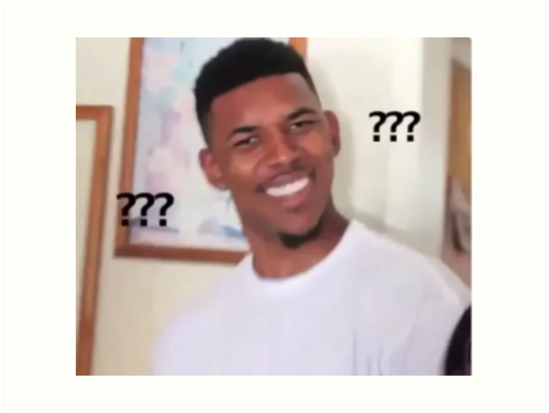
It's how something like this: (something that becomes parodied later)
 \
\Can become this:

And then into variations of different memes/versions: (because it was shared often and parodied even more that it became a universal symbol/code for a few million people)


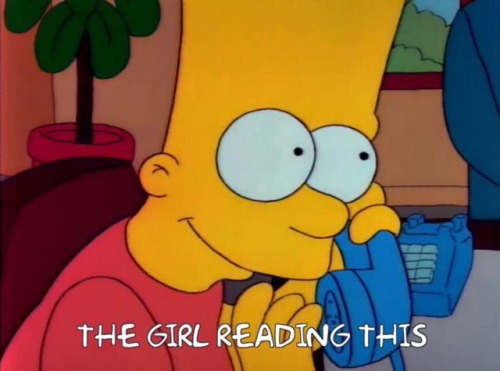
Until, finally, it becomes something that would seem to be a little strange in context (or in the case of other memes, completely unreadable):

And this is only the tamest and least varied meme I could find quickly that was widely spread.
-_________________________________________________________________________-
Voice Only
This was a really hard one to do. It was hard to stick to a singular, monotone voice with no facial or body expressions. I broke many times and had to turn away from my brother (since my sister left to eat, but she occasionally spoke with us).

The fact that he was so unnerved really drove the importance of even the smallest hand gestures and minuscule facial expressions into me. I've been on the receiving end of a stoic face, tone, and gesture before. I was just as unnerved as my brother. I also fled from the conversation, because I couldn't figure out my place in it, and whether or not the speaker even wanted to continue talking to me. It feels a little less discouraging (though it still is), and more alarmed, unsettled, and flustered.
But from that observation, I surely see a benefit to using such a mode of language. I can imagine that if I am ever later annoyed by someone's persistence to invade my privacy or space, I should forego any irritated expressions and head straight to an expressionless, monotonous mask. It would be intimidating and unsettling. If I react with irritation or displeasure though, the person may recognize my cues and ignore them, and keep talking or invading space. By just using verbal language, and an unexpressive voice instead, I can send warnings sparking in their head, and leave them confused and unnerved when they unconsciously search for any change in body gesture or expression. That'll surely drive them off.
But I also see that without gesture and expressions, humans would not be able to communicate their intentions, feelings, insecurities, and their needs. We would not have the society we have today without those connections to others. Even the smallest twitch in facial expression, or the leaning direction of their body, can clue us in on how they feel. Hand gestures like pointing are crucial to understanding the what, how, where, why, and who of almost anything.
There is a great possibility of the existence of people who have difficulty reading body language, or just don't understand the nonverbal language of another culture. That difficulty just becomes another form of a language barrier, since nonverbal communication is so integral to our way of conveyance.

Actually, now that I'm re-reading this, and seeing that sculpture of that Roman leader (I think), using stoic expressions may have been intentional in such sculptures so they could mimic that unsettling loss of readable signals. Thus he looks intimidating.
ReplyDeleteHi,
ReplyDeleteI love that you managed to compare this to memes, I did not think of that. It is pretty accurate considering most adults will give teens/young adults a strange look as if we are speaking another language--in a way as you showed, we are. I think your post was really creative and It is interesting to read your results since your conversation included three people where as I only included one friend. It's also interesting to see how the power shift is different when there is a different number of people.
Part 1:
ReplyDeleteDid you really have a conversation here? Or were you on the sidelines while they had a conversation? I would have preferred a more concerted effort on your part to be involved here. The idea is to understand how difficult it is to be an active member of a conversation when you are limited to non-symbolic language. I'm not sure you gave yourself the opportunity to push the envelope here and try to find the difficulties that should be part of this process.
"For the most part, I don't think my mode of communication in any way altered the way they communicated. "
Because they didn't need to. They talked to each other. You were strictly an observer, not a participant.
"So perhaps it was partially in my control as well..."
If you had walked away in the middle of this, could they have continued their conversation without you? It sounds like they could have, in which case, did you really have any control and power in the experiment? Could you change topics at will? Ask questions? Steer the conversation where you wanted it to go? And if you did feel this way, could it be because your siblings let you do this? If you had engaged in this discussion with a stranger on the street, just how much control would you have had? Would they have patiently tolerated your limited communication or might they have just walked away? Did you really have control? Or did your siblings give you the control? In which case, was it really yours to begin with?
"I suppose it would mimic that of language barrier conversations.."
That isn't how this question is phrased. If this experiment represented to different cultures, one with symbolic language and one without, which one would have an easier time of communicating *complex ideas within their culture*. That last point is important and should have altered the way you answered this.
Back up and understand what "complex ideas" actually are. Would you be able to explain Darwin's theory of natural selection or Einstein's theory of relativity without symbolic language? I don't think I could. If body language was better at communicating these complex ideas, we wouldn't need spoken symbolic language. Because symbolic language is pervasive in all cultures, that tells us that it is advantageous in communication, particularly with concepts that are just ideas and not things to demonstrate and show.
That is an interesting real-life example and one that hasn't been offered here before. It does mirror the experiment in that it results in a power differential, with the younger generation having the advantage over the older.
Google limited my response, so I will continue it here...
DeletePart 2:
Good opening description. The response of the partner is usually the most interesting aspect of this experiment, with some becoming angry and walking out. Your brother "fleeing" provides a similar response. You explain this as "not knowing your part in the conversation" or whether the person really wanted to talk to you. But could it be something more basic in your reaction? Body language helps a person know if a person is speaking truthfully or not (whether it is an outright lie or a joke or sarcasm). Wouldn't it make you uncomfortable not knowing if the person you are talking to is speaking truthfully to you or lying?
I don't disagree with your conclusions regarding the information we receive from body language, but you are only considering the situation where body language matches and supports the information you receive from spoken language. What does it tell you when the body language doesn't match the spoken language? Humans tend to use body language as a type of lie detector. If spoken words don't match with the body language, we are more inclined to believe the body language and doubt the words. Think about how being able to detect liars might help an individual's ability to survive and reproduce (which applies to the next section).
Okay on the benefits of body language, but what type of benefits do you get by being able to detect liars?
"There is a great possibility of the existence of people who have difficulty reading body language"
There is a 100% possibility that they exist... e.g., those in the autism spectrum. One of the defining characteristics of autism is the inability to read body cues, which is why they have so much difficult in social situations, particularly with sarcasm and jokes. Those who are blind also have difficulty, though they can hear vocal intonation (also body language) and interpret spatial information (body positioning).
Missing the last point? Can you think of a situation where it might be better to avoid reading body language? Is there any situation you can think of where body language might actually mislead you, not because the person is lying but because you don't know how to read the body language? Do all cultures use the same system of body language? They all use different systems of spoken/written language, so why would we assume their body language isn't different? If you travel to another country, can you trust the information you get from their body language?
Hey Roxana!
ReplyDeleteSo I did enjoy reading your blog post but I had a couple of thoughts. You said that your sisters didn't really seem to change the conversation based on your non-verbal input. Did you try to direct the attention to yourself in any way through gestures? I really appreciated the memes in this and I enjoyed reading your post! Great job!